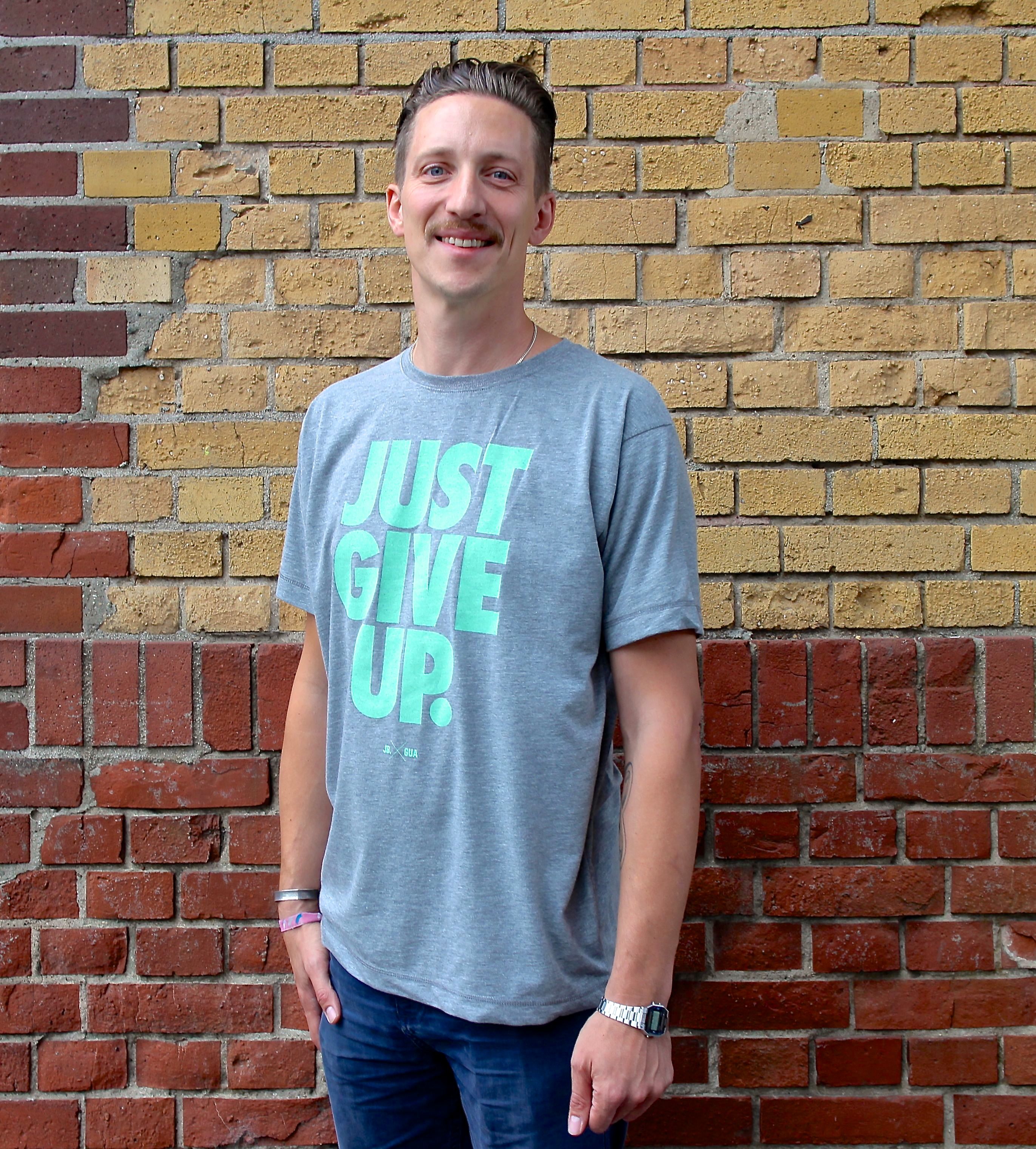
Jenne Grabowski
musician and designer – Berlin
“I like stories, and I am a storyteller in my particular way either when I am playing music or making design or art,” says Jenne Grabowski about himself. And be sure, you can’t slow him down: Jenne is a Berlin-based musician, a designer and the founder and art director of JB. Magazine, an indie magazine which celebrates the interplay of the arts, music and street culture. It’s all about movement, change and creative visions but never about giving yourself up to the fast pace of life today. His topics are well-chosen and include extensive interviews with a personal touch, loads of art, photos and selected works.
Whenever Jenne is not busy searching for interesting people and topics or working on a new design project, you can find him either on the skateboard or behind the mixing desk. He has been playing all around Germany, i.e. some of Berlin’s most well-know clubs like WMF, Panorama Bar, Bar 25, Café Moskau, Watergate or Cookies. Also, Jenne acted as the tour DJ of The Whitest Boy Alive on their “The Patience” tour through Germany. This circumstance gets us down to a beautiful liaison between three of our supporters: Jenne is friends with DENA and hand in glove with Marcin Oz and we are glad to have found supporters in all of them, true to the motto: “Support each other. Together we are strong!”
A very warm welcome!
What is more important to you, the sense of taste or sight?
If I’d loose sight, I would still be able to taste all the yummy food. Or I could still see the sun shining while everything tastes neutral. Damn, both are important and I hope I can keep those senses forever.
You are a creative person. What is your vision for your personal work?
I want people to explore a little something that could be common or special, to find something of themselves. I like stories, and I am a storyteller in my particular way either when I am playing music or making design or art. Balancing humour and seriousness, relevance and vanity, extent and detail.
JB. Magazine covers the arts, music, and street culture. Is it your personal mouthpiece? Who do you want to reach and what is your intention?
Yes, you can call it my personal mouthpiece that is influenced by a bunch of people, animals, things and whatever involved, making it happen. JB. is about telling stories. The stories of others, my personal stories, those of my friends, of dreams and how we shape our reality. I want JB. to reach out to people that are awake and share a sense of awareness while I am not focussing too much on a particular culture. Of course, sharing certain kinds of interests makes me able to connect more easily with other people, and this is important to me. It fills this project with power. When I think of the magazine and the potential reader, I don’t know anything about the person flipping or reading or wandering through our editorial world. But if I reach out to people who are not necessarily using the same colors to paint that I would, but making them think about the colors or listen to a sound that hasn’t been audible in their lives before, then that would be one very important accomplishment.
To what extent does Berlin, your place of residence, exert influence on your work but also your personal way of life?
It surely does, but after such a long time living in Berlin, I cannot state the extent of it anymore. I have family in this town, so many friends, skate-spots, art, music or work, the countryside around where I am meeting foxes and squirrels and trying to hang with beavers… Everyone has a large share at it. Kreuzberg is my home, it’s the basis of my current chapter in life but I am always eager to wander out to explore new places and spaces, close and far away.
„We slow down when everything is going fast“ – this sentence is part of your mission statement and seems to reflect your main intention. What is your personal advice for coming down?
We love what we do and we are progressing and moving in the forward direction. But we are not submitting ourselves to the fast-moving nature of our world and to the compulsion of cultural change. Though the only constant is change, we are taking it really easy. Both feet on the ground as we can’t fly. Well, sometimes we can… If something is not happening now, we can wait with ease for another good moment because the next moment will always be the best.
Print was declared dead when online magazines got stronger and stronger. But you still believe in the power of print. What makes it so unique to you?
“Punk was dead when the first punk said: Punk is dead!” This is nothing nostalgic, it is a serious thing. Somehow we are fulfilling a desire that had been there for so long. It is also the wish to have something real in a digitized world. We are digitizing our brains day in day out. It is something for the tactile perception. Watching, reading, cutting, folding, tearing out a piece of art and altering it into new art, or hanging it on the wall, sharing issues or articles, burning the paper. It’s like having sex instead of thinking of it. Sometimes the thought is enough, but reality can be pretty sweet.
What is the most beautiful thing you ever saw?
I love and hate superlatives. And it’s hard to pin down a single moment or thing to claim it the most beautiful. But I would say it was the birth of my son Henri, because this magic was not happening on this planet.
What would you like to see more often?
People with courage and presence. James Turrell skyspaces. The real mountains. Or a James Turrell skyspace in the mountains, like the one in Switzerland I found last summer. The sea. The skateboard under my feet. My friends that I love but live to far away, even just to see them for a high five…
What do you prefer: sunrise or sunset?
I love both. Including the twilight. Sunset is about ending, which can be really dramatic. But the aesthetic, the transition is such a beautiful thing. The sunrise is always the beginning of something new. The unfolding, the flourishing, watching it all grow and not knowing where it will take us.
When was the last time you gave back and what did you do?
Giving should be natural in order to receive. But always without expecting anything in return.
What is your tactic for making the world a better place?
Staying in the now and keeping in my mind that life is actually about nothing. No faster, stronger, better, whatever. It all just happens in its own pace. Just give up! That is the formula.
Who is your personal hero?
No glorifying, but it could be a long list. If I think of someone next door, it would be my son who just drew me a complex weather chart, my good friend who just borrowed me a piano or the other who connected me to one of my most favorite street photographer from New York!
What is your picture/sound for IWISHUSUN?
Picture: the fall leaves and the golden sun in the woods the other day.
Sound: the sound of my skateboard I am riding on down the street by the sea while I am humming.
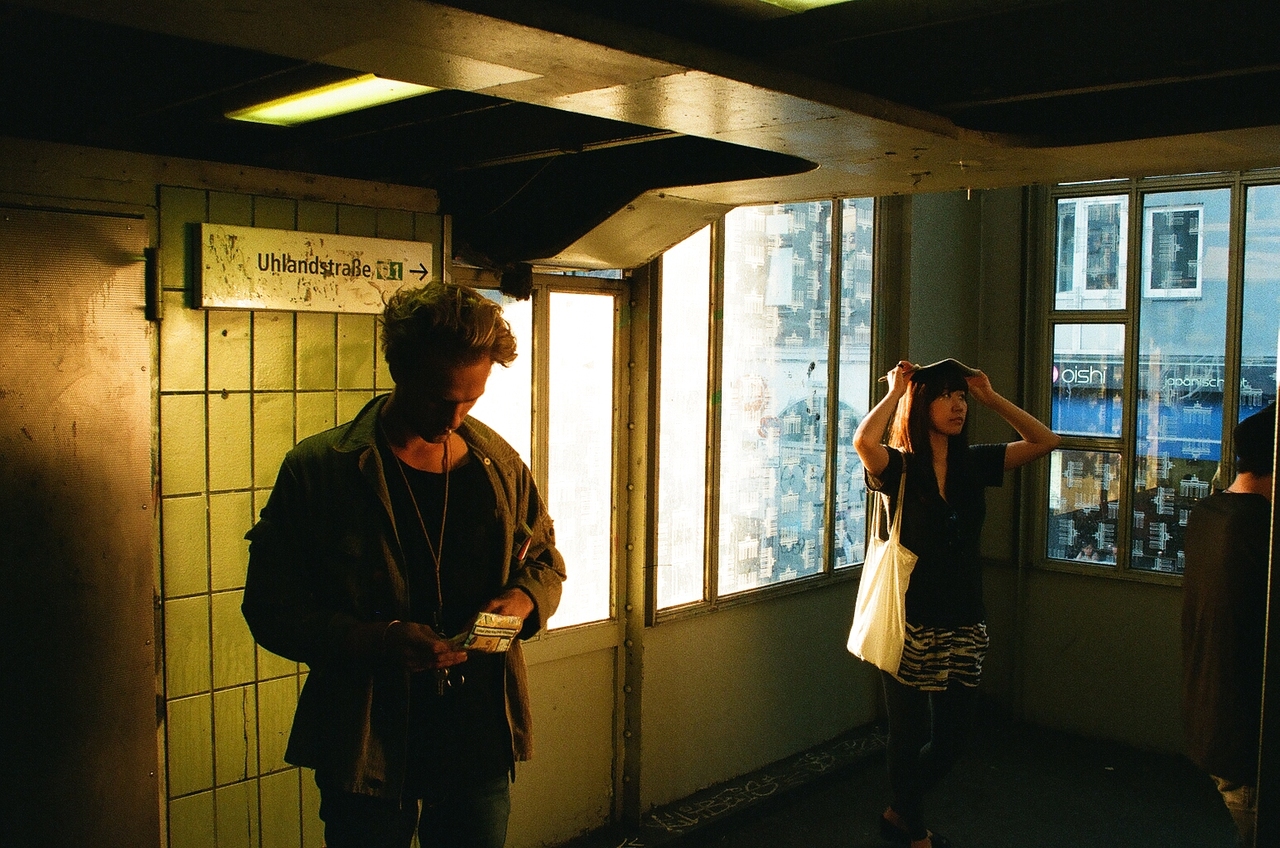
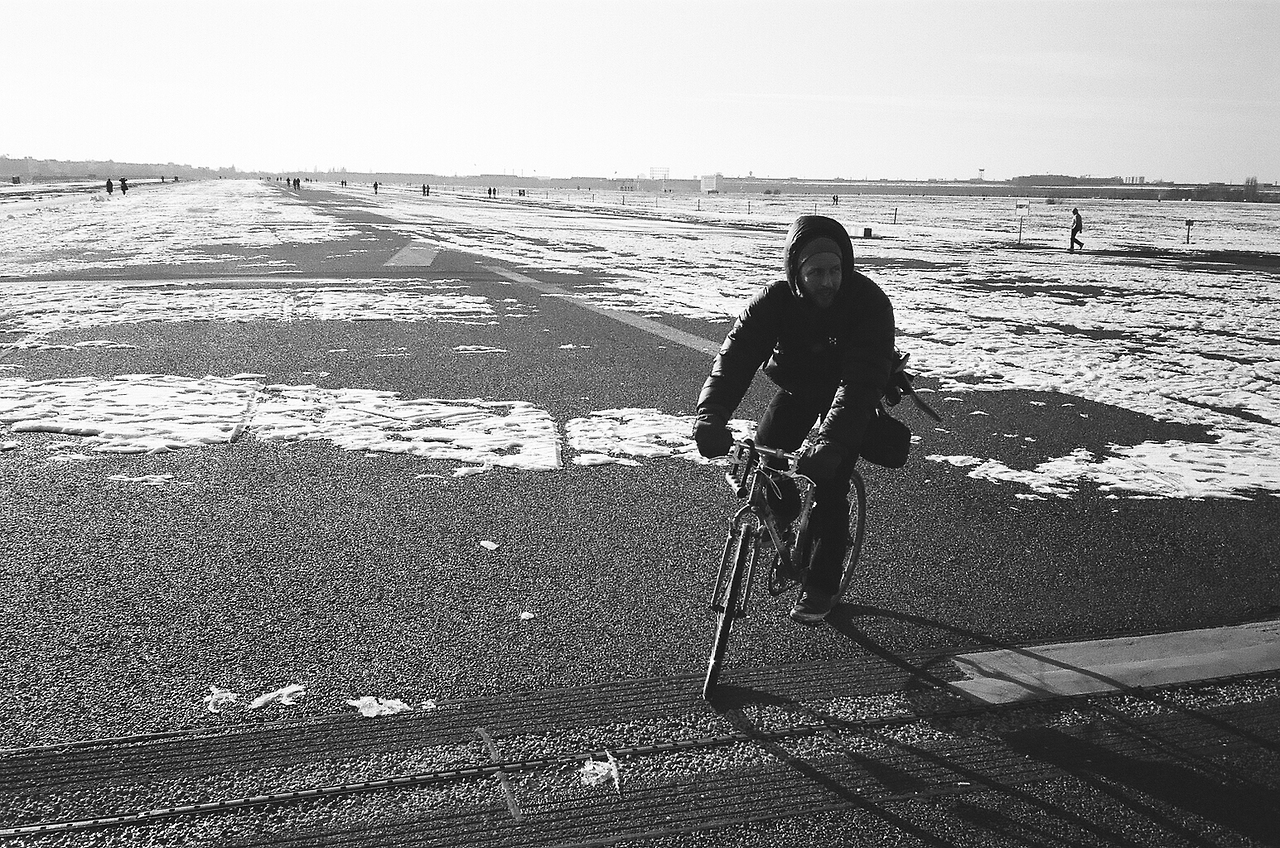
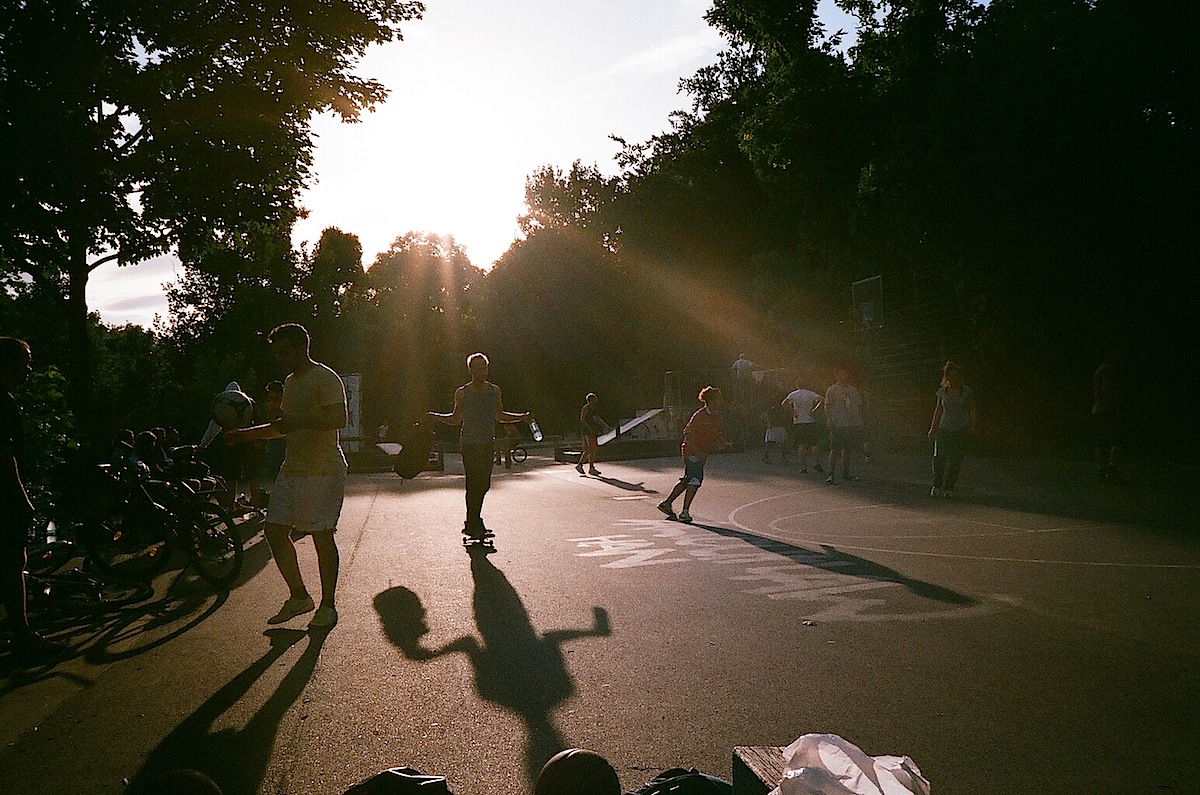
Did we forget to mention that Jenne takes beautiful pictures, too?! Check out his photos here.
Silas Adler
Designer & Founder of Soulland – Copenhagen
Danish menswear brand Soulland has always impressed us: clear and simple and deeply devoted, on the one hand, to a distinctive Scandinavian aesthetic. On the other hand they always manage to be playful and sporty, enjoying experimenting with patterns, materials, cuts, looks but also presentations and collaborations. Their enthusiasm for off-the-wall projects has even led to the production of an own stamp in partnership with the Danish Post, to a collaboration with Playstation, to a whole collection dedicated to Barbar The Elephant and to a virtual runway presentation via smartphone. Soulland is without doubt one of the few brands that have been taking menswear to a whole new level over the last couple of years, designing collections that are innovative and classic at the same time.
Soulland’s head designer Silas Adler founded Soulland in 2002 when he was only 17. What started as a small brand specialised in printed T-shirts and run by a young, passionate skateboarder without a concept, much expertise or aim, has now grown into the unique menswear brand of today. “With knowledge came a cause and with the cause came the concept,” as Silas once said in an interview. “But my ambitions grew and I wanted to launch a full menswear collection. I had to learn everything from scratch and these things take time. But for me it was the right way and the only way to learn it.”
As a self-taught designer and businessman, as a creative mind who clearly disregards genre boundaries, Silas Adler is our first official Danish supporter. We are very happy to welcome him as a friend of IWISHUSUN.
Soulland stands for modern menswear, but also for experiments regarding the presentation and multidisciplinary collaborations. What is your vision as a creative person for your own work?
Never be secure, never give up and never stop being curious.
What is more important for you, the sense of feel or the sense of sight?
Everything is linked in my life.
Which thing or location in Copenhagen do you love to see everyday?
My home! That’s where my family is.
In Scandinavia the summer solstice is a big celebration – the Danes celebrate Sankt Hans Day on the 23rd of June. What does the sun mean to you?
I’m half Tanzanian so the sun is the god of my forefathers. I’m equally Swedish and the sun is also a god for my Scandinavian forefathers. The sun is light and light is life.
You grew up in Denmark, so you are used to long winters. Do you have a secret remedy that gets you through the dark time of year?
The thing about Danes is that even though we have long winters, we never get used to it. It’s like a collective seven-month depression. We normally use alcohol to get through it.
In your words, what distinguishes life in Copenhagen in winter from summer?
Summer is heaven, winter is hell. And both are important in their way!
Through your label Soulland you travel a lot. Which place and what else would you love to see more often?
New York and Paris. The two true metropolises. New York is the new world and Paris is the old world…
What is your tactic for making the world a better place?
Go by bike instead of a car. Smile instead of not smiling and be active instead of being passive.
When was the last time you gave something back to someone and what did you do?
The person that needs to know, knows..
Who is your personal hero?
David Lynch!
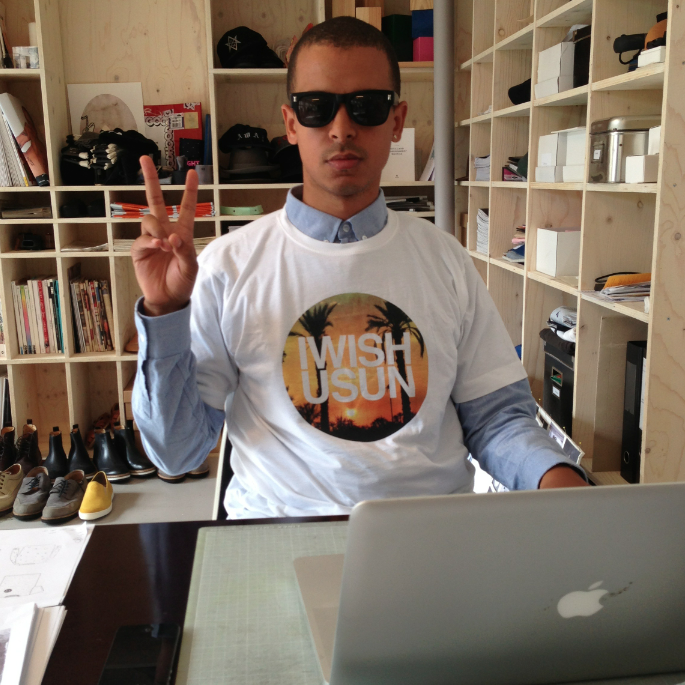
Picture: Sascha Oda.
]]>
Hien Le
Designer – Berlin
Hien Le might have marked summer 2010 as a relevant turning point in his career and path of life: during Berlin Fashion Week 2010 the Berlin based designer launched his own fashion label which was immediately received very well by retail and the international fashion press. One year later he won the third prize of the fashion contest “Start Your Fashion Business,” making his first runway debut and has been nominated as “Best Newcomer” by the international fashion trade magazine Sportswear International.
His designs are clear and simple but never run the risk of being boring – Hien Le formulates crystal-clear purism and sets value on high-qulity materials. He concentrates on discreet cuts and the subtle application of details. As a trained tailor Hien Le consequently maintains his claim to manufacture clothing that combines diligent design with accurate workmanship; everything produced in Germany. We could not imagine Berlin Fashion Week without Hien Le and we are very happy to welcome him as a friend!
Which of the senses are more important, sight or hearing? And why?
Both are very important, but because I am a very visual person, in this case I would go for sight.
You’re a creative person. What vision motivates you in your work?
My daily life; I live and love what I do… otherwise I couldn’t do it. The aim of seeing the collection completed, and all together, is what motivates me. I always look forward to the development and the collection process as a whole.
Where do you get the inspiration for your collections?
That differs from one collection to the next, but it is usually the daily things that surround me all the time…that could be music, art, architecture or film. I find cities and the people who live in them are always very inspiring.
How important are materials for you? What do they mean to you and where do you get them?
Materials are obviously very important for what I do. My collections are very reduced; many details are only noticeable on closer inspection. Colours and materials are what define the collection. I am a very tactile person myself and so I only use materials that I would wear myself or which feel good to the touch. Above all it’s important that they are produced under fair trade conditions. Until now I have only ordered textiles from Europe, mostly from Switzerland and Italy, and for this season for the first time cloth from Australia. I buy all my textiles at trade fairs.
Over the last few seasons the focus of your collections was on monochrome looks. The sharp silhouettes and the feel for high quality materials have remained, but for Spring/Summer 2013 the theme was flamingos and for the Autumn/Winter 2013 collection you introduced striking colour fusions, inspired by Mark Rothko, which both brought colour into your collections. How important is the visual impact that expresses for you and your work?
They are very important. Because everything is very minimal, monochrome and reduced; and one often sees the details only on closer inspection, as I already mentioned. So I can create major impact by relatively simple means, like with the last prints of the two most recent collections. That gives the collection more tension and breaks up the complete monochrome look, whilst still remaining true to my style. Being quite minimalist is an advantage in the sense that I am able to constantly expand on it and introduce new elements without completely transforming it, but remaining within the recognisable “Hien le” signature style.
And privately? What do you prefer? Eye-catchers or more restrained clothing?
More restrained.
What is your tactic for improving the world?
Living in a conscious way; taking pleasure in and valuing the gifts nature has given us. When it comes to my job, I always try to ensure that everything is made under fair trade conditions, whether in the production or the manufacture of the textiles I order.
Who is your personal hero?
My grandfather.
What is the most beautiful thing you have ever seen?
There have been so many beautiful things, but the most recent was a sunset on Bali.
Sunset or sunrise?
Sunrise.
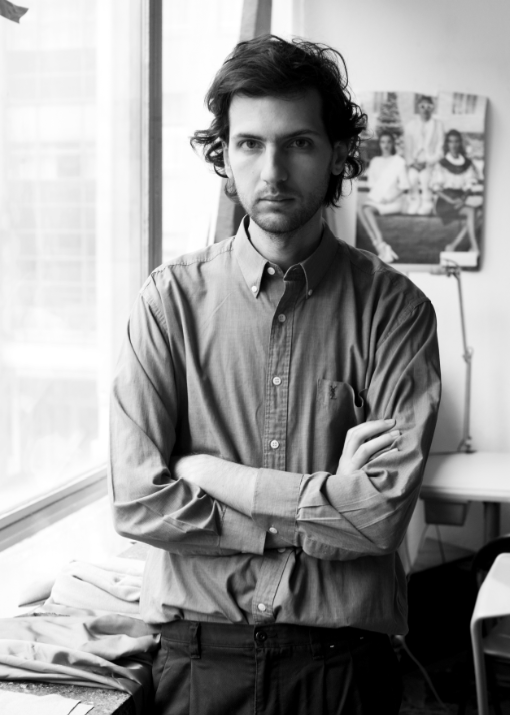
Picture: Micki Rosi Richter.
]]>
Vladimir Karaleev
Designer – Berlin
Vladimir Karaleev is without a doubt one of the most promising names at Berlin Fashion Week. From year to year we watch as he continues to develop, whilst remaining true to himself at the same time: clearly contoured experimental cuts and open hems, asymmetry and drapery, silk and wool dominate his collections, which are strongly influenced by the aesthetic of contemporary art. While his minimalistic styles are distinctive, the Bulgarian designer Karaleev, who is based in Berlin and founded his own fashion label in 2006, never gets tired of experimenting – and we hope he keeps on keeping on!
We are true fans of his designs but Vladimir Karaleev also supports IWISHUSUN. Welcome him as a friend!
What is more important to you, the sense of taste or sight?
It is hard to compare; both are interconnected. What is sight without taste, and taste is somehow based on sight. Both are very important I guess!
You are a creative person. What is your vision for your personal work?
A permanent quest for new ideas through experimentation.
Most of your designs are based on flowing cloth and asymmetry – is this decision a question of visual aesthetic or of emotion? How important is the visual power of your designs?
I think every designer finds their own way of expressing their visual language. I guess mine is based on sometimes less conventional techniques (the starting point of which can sometimes be a very basic pattern). I found it very hard to find a good balance within asymmetrical forms (if you think mathematically, there is no true balance in asymmetry, so you have to somehow compensate aesthetically). I am not really into prints; for me the perfect shape is a precise interplay between fabric, volume and colour: if they can get together without too much of a fight, then you’ve got it!
Silk is probably your most frequently used fabric. How important is the choice of material for you, and what does a fabric like silk transmit from your point of view?
I don’t confine myself to any one fabric. Sometimes silk gives me what I want, in order to achieve the shape I want, but my fabric of choice is wool. I love heavy falling wool crepe. And I mean, fabric is everything, it does transmit and carry the whole structure and shape.
Where do you source your fabrics from?
Mostly Europe, but you never know where they import their fabrics from. I must say, Europeans are not always the best partners, at least compared to Asia, where they have a much better work ethic.
What is your tactic for making the world a better place?
It’s important to take social responsibility and I try to take part in various causes that are close to my heart. Sometimes I feel bad because I don’t have more time, since our world is full of problems. As an entrepreneur I try to be as environmentally friendly as possible, to make my products sustainable without wasting too many resources - I do worry about that. Giving back is not a one-time act; it has to be a way of life and if more people lived that way, it would be much easier to solve many of our problems…
What is the most beautiful thing you ever saw?
I don’t know. I am not impressed by “beautiful”.
What would you like to see more often?
Understanding between people, tolerance, people listening to each other. In general, we are the problem and the solution: but currently it seems we have too many problems, and I’d like to see more solutions.
Sunrise or sunset – which do you prefer?
Sunrise, it’s a new day.
Pic: Dirk Merten.
]]>